Description
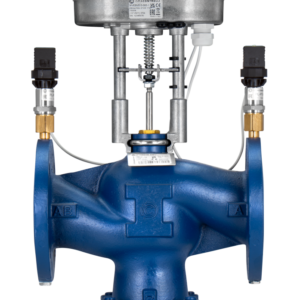
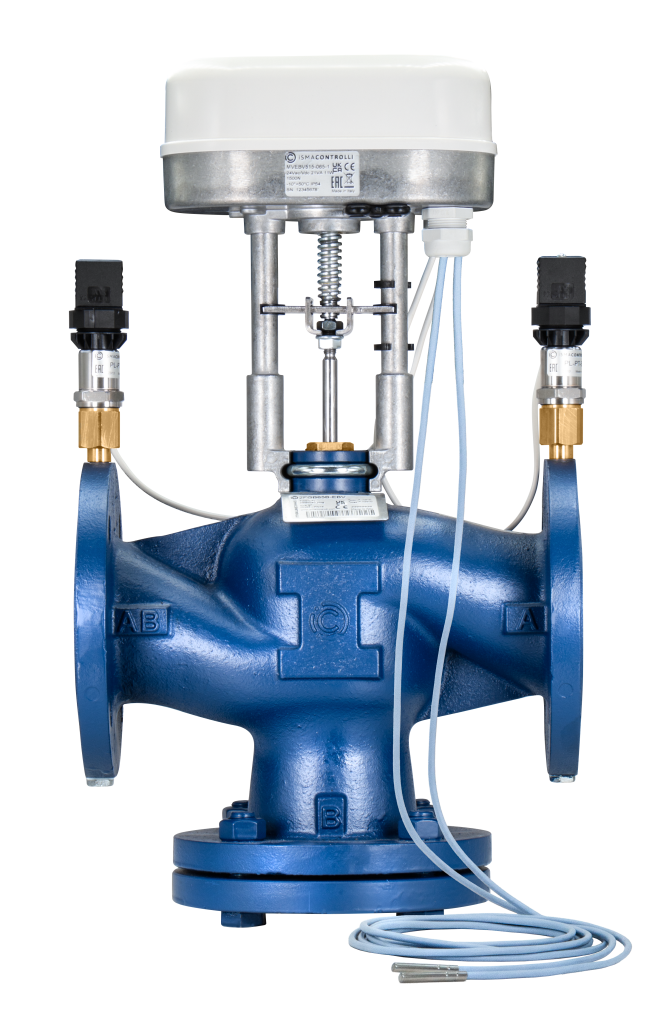
Energy Valve combines electronic PICV functionality with an integrated Energy Function, using supply and return temperature sensors to enable real-time thermal power control and energy monitoring. In addition to maintaining constant flow through high-resolution differential pressure sensors, the valve measures supply and return temperatures and calculates instantaneous thermal power based on the current ΔT and flow rate. This allows for precise thermal power regulation, ΔT optimization, and full energy monitoring via BACnet MSTP or Modbus RTU.
The Energy Valve range covers DN65–150, PN16, with flow capacities from 12 000 to 177 000 l/h, and supports media temperatures from –10°C to 120°C. It provides continuous monitoring of temperatures, flow, thermal power, energy consumption, alarms and diagnostic information.
Designed for heating groups, AHUs and high-capacity coils, the Energy Valve improves system efficiency by maintaining optimal ΔT, preventing coil saturation and enabling data-driven performance optimization.
Key Features
Electronic PICV with integrated temperature sensors NTC 10.
Thermal power control and real-time ΔT optimization.
Energy monitoring.
DN65–150, PN16, flows 12 000–177 000 l/h.
Min ΔP 35 k
Pa; media –10…120°C.
High-resolution ΔP sensors for stable flow control.
Diagnostic and monitoring functions.
BACnet MSTP and Modbus RTU connectivity.
Benefits
Ensures optimal ΔT and maximizes coil efficiency.
Enables measurement of thermal power and cumulative energy.
Reduces operating costs in chilled/hot water systems.
Allows BMS-based optimization using real performance data.
Avoids under-performing coils by automatically correcting flow.
Applications
Air Handling Units and large HVAC coils requiring thermal power control.
Heating groups and substations with energy metering needs.
Variable-flow systems with ΔT optimization.
Chilled/hot water production plants with performance monitoring.
Commercial buildings requiring energy-transparent HVAC operation.